
BIRD CONTROL
about pest birds
Pest birds such as pigeons, gulls and starlings can create serious hygiene, safety and property issues for both homes and commercial premises. Their droppings can contaminate walkways, plant, stock and external surfaces, while repeated roosting and nesting can block gutters, damage roofs, stain façades and accelerate wear to buildings.
Bird fouling is more than just unsightly. The HSE highlights disease risks linked to bird droppings, including Psittacosis and Salmonella, which is why contaminated areas should be handled with the right equipment, training and cleaning procedures.
At CSS Pest Services, we provide specialist bird control programmes throughout the UK to help prevent the spread of disease, reduce damage to the fabric of buildings and protect your premises with safe, legal and effective solutions. Our trained team can survey your property, identify the level of bird pressure and recommend the most suitable control measures for long-term results.
Explore our range of bird control services below:
OUR SERVICES
bird deterrent systems
Bird deterrent systems are designed to prevent birds from landing, roosting, nesting or feeding on your building. The right system depends on the bird species involved, the layout of the site, the level of pressure and the appearance of the building.
We install a range of deterrent and proofing measures including spike systems, bird netting, spring wire systems, optical gels and timed laser bird deterrent systems. These physical and visual barriers are selected following a detailed survey so that the system is effective, discreet and properly suited to the property.
Professional installation and ongoing maintenance are essential to make sure proofing continues to perform as intended. When fitted correctly, deterrent systems can protect ledges, roofs, façades, signs, loading areas and other vulnerable parts of a building without harming the birds.
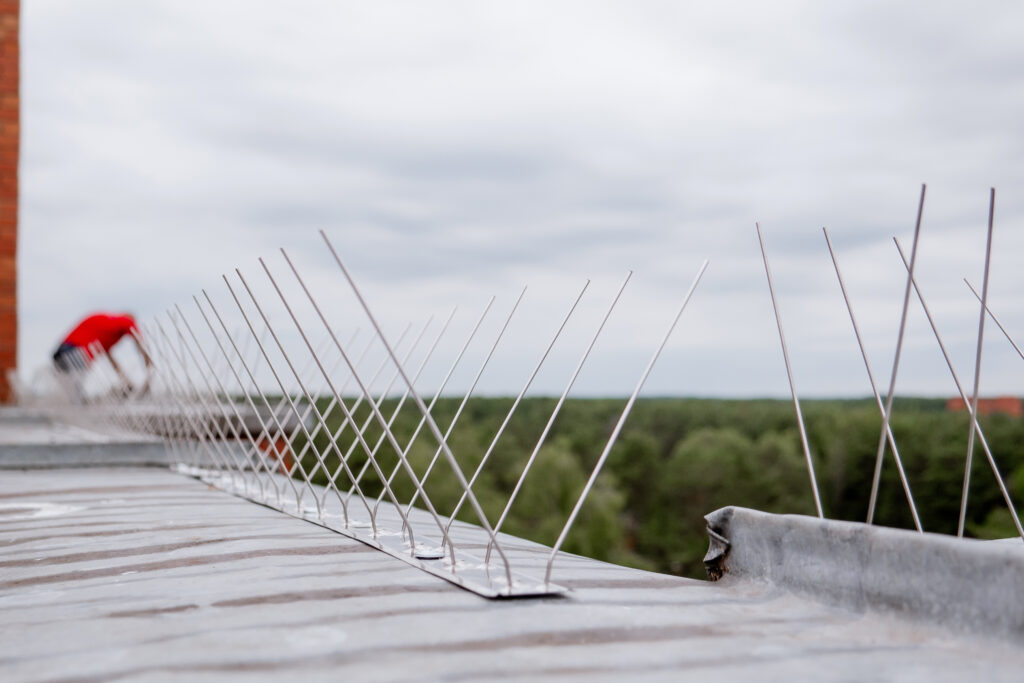
SPIKE SYSTEMS
Provide a reliable physical barrier fitted to window ledges, signs, rooftops and other surfaces to stop birds from roosting. Their characteristics are tailored to the target bird species, site aesthetics and building surface for maximum effectiveness.
Key factors include spike density (denser for smaller birds like pigeons, sparser for larger gulls), width (extending ½ inch over edges and within 1 inch of walls), and length (longer than the bird’s legs). Stainless steel spikes offer superior durability, weather resistance and sharper deterrence compared to more affordable but less robust plastic options.
BIRD netting
Bird netting creates an effective physical barrier to exclude birds from larger areas like roofs, historic buildings, commercial sites, and hard-to-reach spaces where access is difficult. It’s popular for its near-invisibility when installed professionally, covering wide surfaces while allowing maintenance through integrated access zips.
Netting is selected based on bird species, area size and site aesthetics – strong UV-stabilised nylon or polyethylene meshes prevent birds from nesting or roosting. Proper tensioning, secure fixing and regular inspections under maintenance contracts ensure long-term performance without sagging, tearing or bird breakthrough.

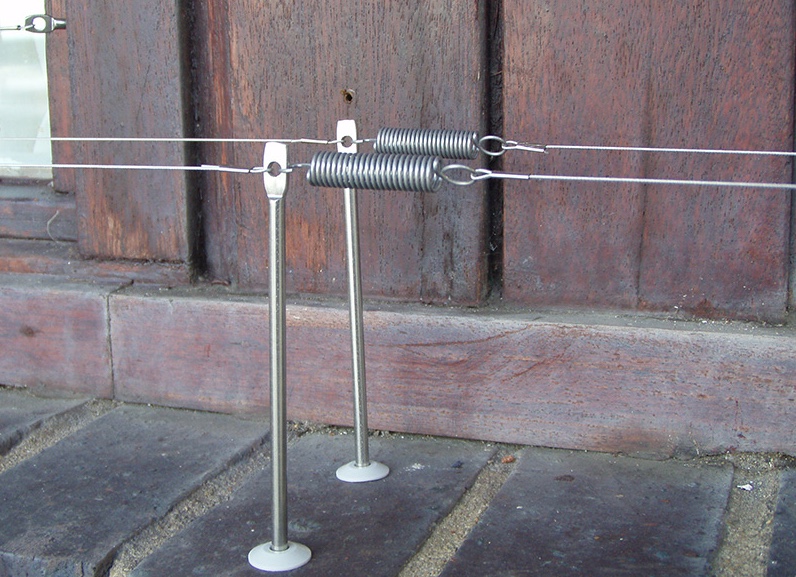
SPRING WIRE SYSTEMS
Spring wire systems use nylon-coated, tensioned wires stretched between discreet stainless steel posts to create an unstable landing surface for birds on window ledges, ridges and narrow perches.
This humane method prevents pigeons, gulls and similar species from gaining a foothold without permanent visual impact on buildings.
The spring-loaded tension keeps wires vibrating slightly under bird weight, making roosting impossible while allowing easy cleaning beneath.
Systems are customised for ledge width and bird pressure, with professional installation ensuring long-term reliability and minimal maintenance.
OPTICAL GELS
Optical gels are a discreet, harmless chemical solution containing oils and ultraviolet pigments invisible to humans but appearing as flames to birds, combined with an unpleasant smell that deters them effectively.
Applied by specialists, the gel disrupts birds’ perception of the structure, making it unappealing for landing or roosting so they seek alternatives elsewhere.
This non-physical method is ideal for historic properties or visible areas, remaining virtually undetectable from the ground while requiring minimal maintenance when correctly installed following a site survey.


© Bird Control Group
TIMED LASER SYSTEMS
Timed laser bird deterrent systems use automated laser light beams to scare birds from landing or roosting on premises, offering a humane and eco-friendly alternative that works indoors or outdoors, 24/7.
We deploy various units tailored to the site size and bird pressure, including advanced models with dual lasers that randomly shift beam patterns to stop birds habituating to the light. Handheld laser scarers provide targeted dispersal for immediate clearance, ideal for arable fields or urban areas where noisy deterrents like gas guns aren’t suitable.
Following a survey, we recommend and install the right system with minimal visual impact and low ongoing maintenance for reliable, long-term bird control.
FALCONRY

Falconry remains one of the most effective ways to disperse pest birds from large open spaces and sensitive public areas. Using trained birds of prey, our falconers encourage pest birds such as pigeons and gulls to leave the site and view it as an unsafe place to return to.
This method is especially useful in locations where conventional proofing is not practical or where birds are gathering across wide areas, such as stadia, industrial sites, public spaces and construction projects.
All animals have their natural predators, and even urban birds that have no first-hand experience of predation still retain that instinctive memory. For a pigeon, simply seeing a bird of prey – which in the wild would be its natural predator – is enough to cause it to take flight.
Different pest species respond in different ways, so each programme is tailored to the site and may involve a series of visits as part of a targeted blitz approach.
Falconry is a humane bird control method because the aim is deterrence rather than harm. It works by using the birds’ natural instinct to avoid predators, helping move them on without creating noise or disruption associated with some other control methods.
SOLAR PANEL PROTECTION
Roof-mounted solar panels often create an ideal sheltered space for birds such as pigeons and jackdaws to roost and nest. UK guidance for solar bird-proofing explains that perimeter barriers or mesh are commonly used to stop birds gaining access beneath panels, where nesting material and droppings can build up over time.
Bird activity beneath solar panels can lead to fouling, noise, blocked drainage and damage to the surrounding roof area, and guano can reduce cleanliness around the panels.
Our process starts with a survey of the infestation and any damage, followed by debris clearance and the fitting of specialist mesh to exclude birds from the gaps underneath the panels.
Installed neatly and correctly, solar panel netting helps protect your investment without interfering with the efficient running of the system. It is a specialist service, and proper fitting is important to ensure the proofing is secure, durable and visually tidy.


BIRD GUANO & NEST REMOVAL
Bird guano, nesting material and carcasses should be removed carefully and professionally because contaminated waste can create health risks and leave buildings in an unsafe condition.
HSE guidance highlights bird droppings as a source of biological hazard, which is why safe handling, cleaning and decontamination procedures are essential.
Our bird fouling clearance service removes hazardous waste associated with pigeon and other bird droppings, together with nests and debris left behind in roof spaces, ledges, gutters and other affected areas. This helps restore hygiene, reduce odours, prevent further contamination and prepare the site for proofing or deterrent work.
Where nests are involved, the work must always be carried out legally and with proper regard to wildlife law. GOV.UK states that general licences apply only in certain circumstances, so if a species is not covered, specialist advice and the correct permissions are needed before any action is taken.
CONTACT US
Fill the contact form below or visit our Get In Touch page to alert our expert team about your problem. We will contact you as soon as possible to arrange the next steps.